Improving Help & Support for OneCard
Problem Space
Customer help & support experience
Year
2023
Redesigned OneCard’s Help experience to move beyond a chatbot-first approach and address broader user support needs. Simplified navigation, improved critical flows like fraud reporting and card blocking, and introduced proactive features like bill reminders. Focused on making support faster, more contextual, and reliable during high-stress situations.
Scope of Work

Problem
Users rely on customer support during high-stress situations like fraud, failed payments, or blocked cards.
However:
Help was fragmented across multiple flows
Chatbot interactions felt robotic and untrustworthy
Users depended heavily on human agents even for solvable issues
👉 Result: Slow resolution, high anxiety, and poor trust in the system
Key Insight
Not all queries are equal.
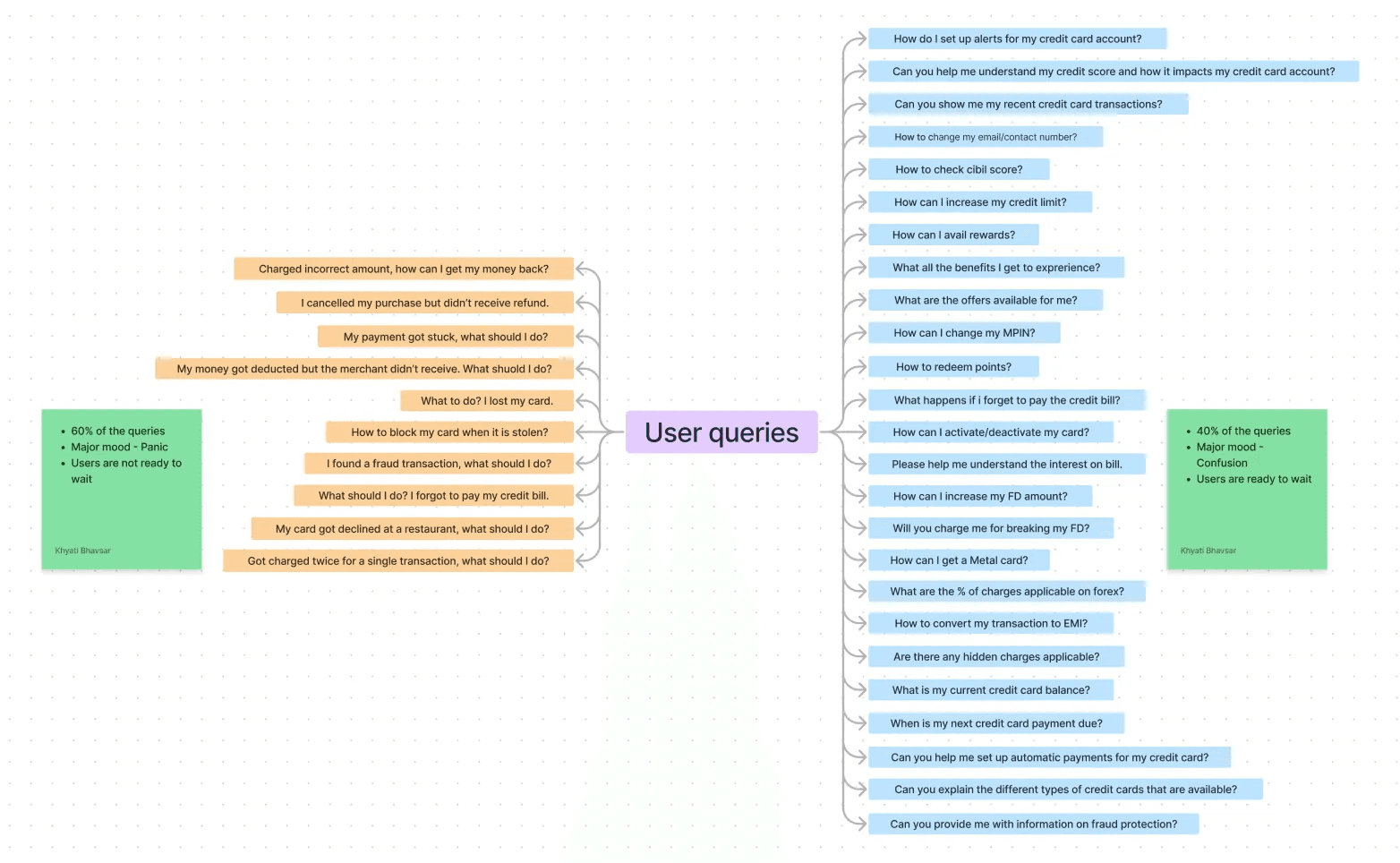
From research, user queries clearly split into:
60% Emergency queries → high urgency, panic-driven
40% General queries → low urgency, informational
👉 Existing system treated both the same → this was the core problem
Supporting Insights
Users are willing to use chatbots, but don’t fully trust them for critical issues
During panic, users want fast, clear, and direct actions
Users prefer self-service, but only if it feels reliable
Lack of empathy in chatbot → breaks trust instantly
Design Direction
Based on insights, I defined 3 core principles:
1. Prioritize urgency over structure
Emergency actions should be immediate, not buried
2. Reduce dependency on support
Enable users to solve issues within the product
3. Build trust through interaction
Make the system feel responsive, guided, and human
What I Changed
Instead of only improving the chatbot, I redesigned the entire Help experience.
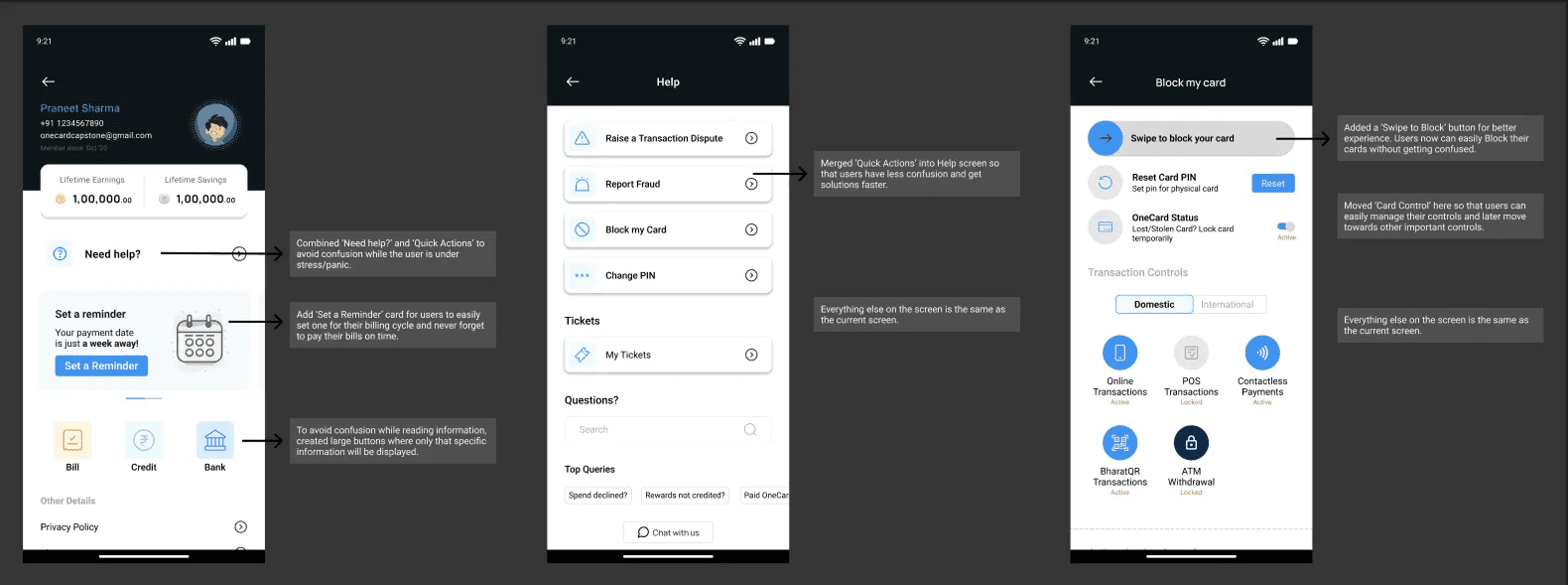
1. Unified Help Experience
Problem
“Need Help” and “Quick Actions” were separate
Users had to decide where to go during panic
Solution
Merged both into a single “Need Help?” entry point
Prioritized emergency actions at the top
👉 Users no longer think, just act.
2. Smarter, Contextual Chatbot
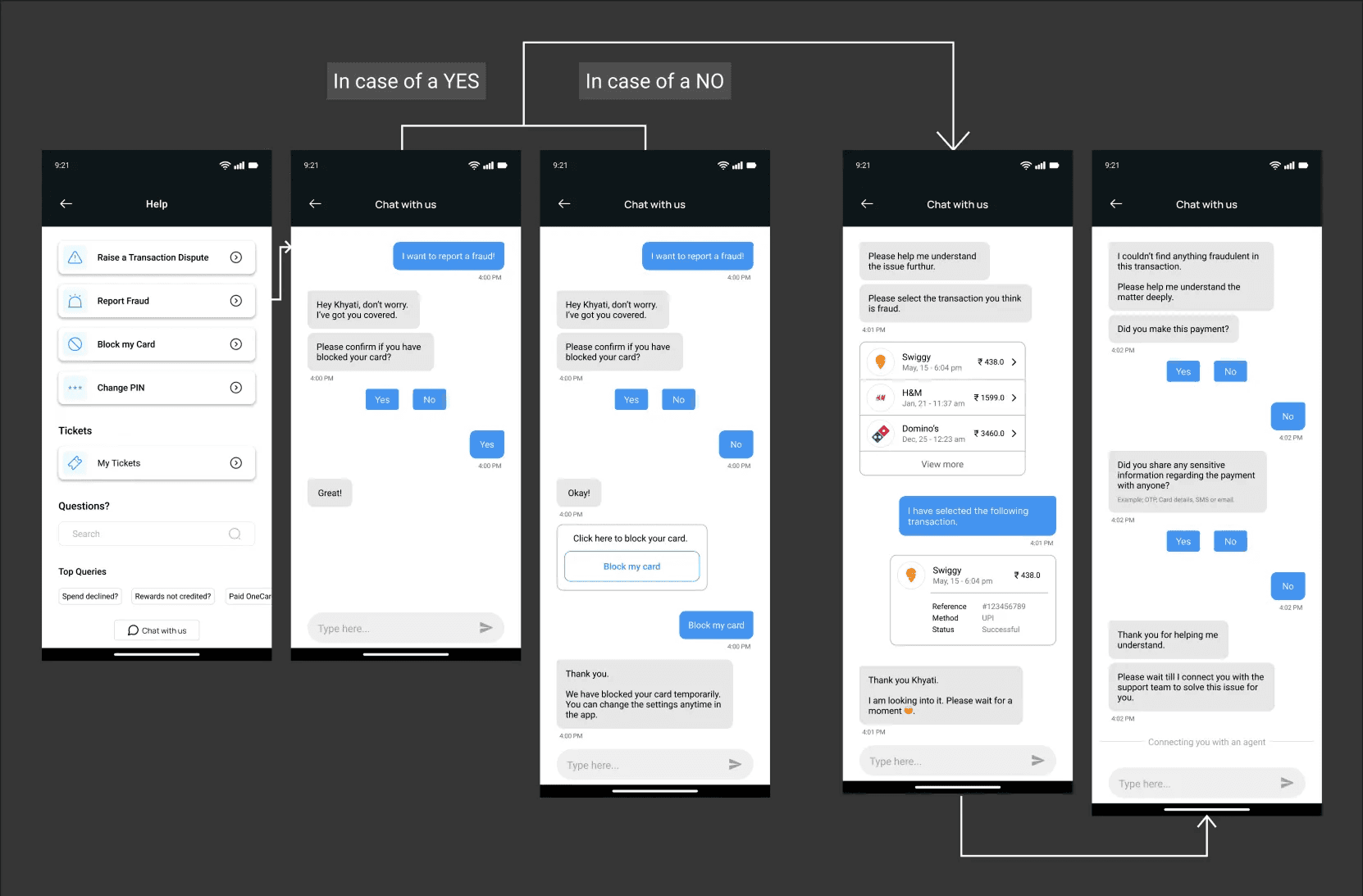
Problem
Robotic responses
Users forced to leave chat for actions
No emotional awareness
Solution
More empathetic and guided responses
Enabled in-chat actions (block card, select transaction, etc.)
Smooth fallback to human agent when needed
👉 Chatbot becomes a problem-solving interface, not just support
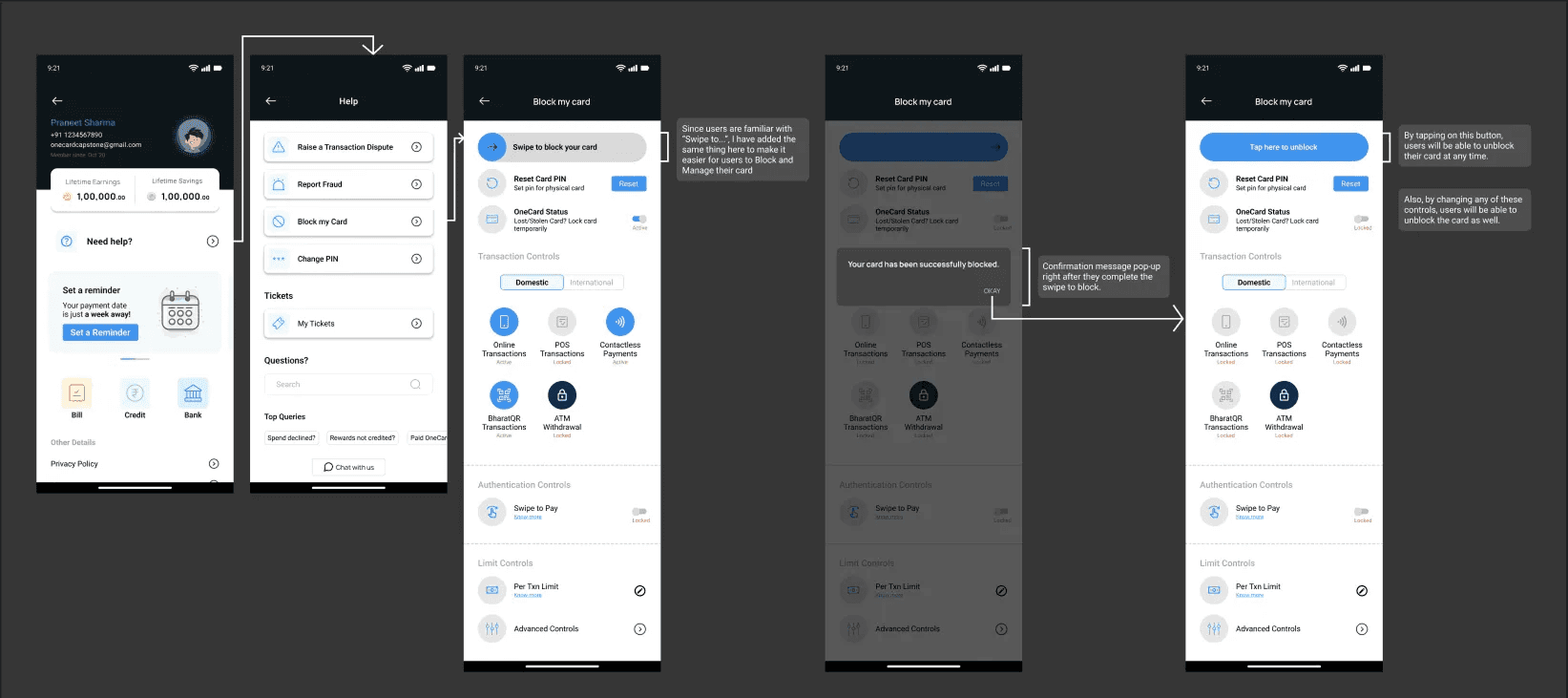
3. Simplified “Block Card” Flow
Problem
Too many controls → high cognitive load during panic
Solution
Introduced “Swipe to Block”
Reduced decision-making to one clear action
👉 Designed for speed under stress
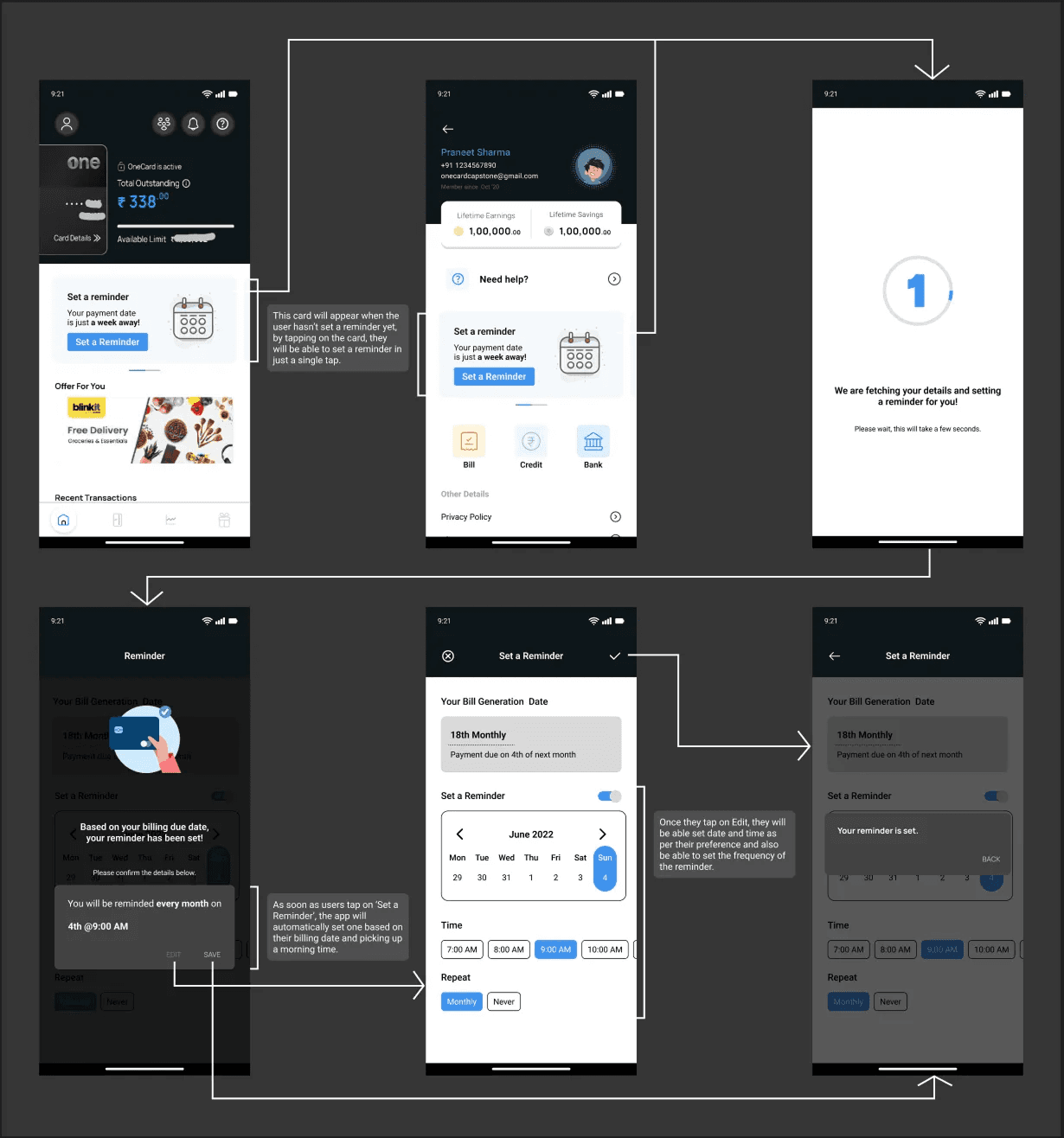
4. Proactive “Set Reminder” Feature
Problem
Users forget bill payments → avoidable stress
Solution
Introduced 1-tap reminder setup
Auto-configured based on billing cycle
👉 Shift from reactive → proactive support
End-to-End Experience
The redesigned system:
Handles urgent issues instantly
Supports self-service resolution
Builds trust through better interactions
Expected Impact
(Hypothetical, based on design decisions - can be validated post-implementation)
Reduced time to resolve critical issues
Reduced dependency on customer support agents
Increased trust in chatbot for high-stakes scenarios
Increased user confidence during emergency situations
Key Learnings
Designing for emotions (panic, anxiety) changes everything
Chatbots shouldn’t just respond - they should guide decisions
Real impact comes from system-level thinking, not isolated features